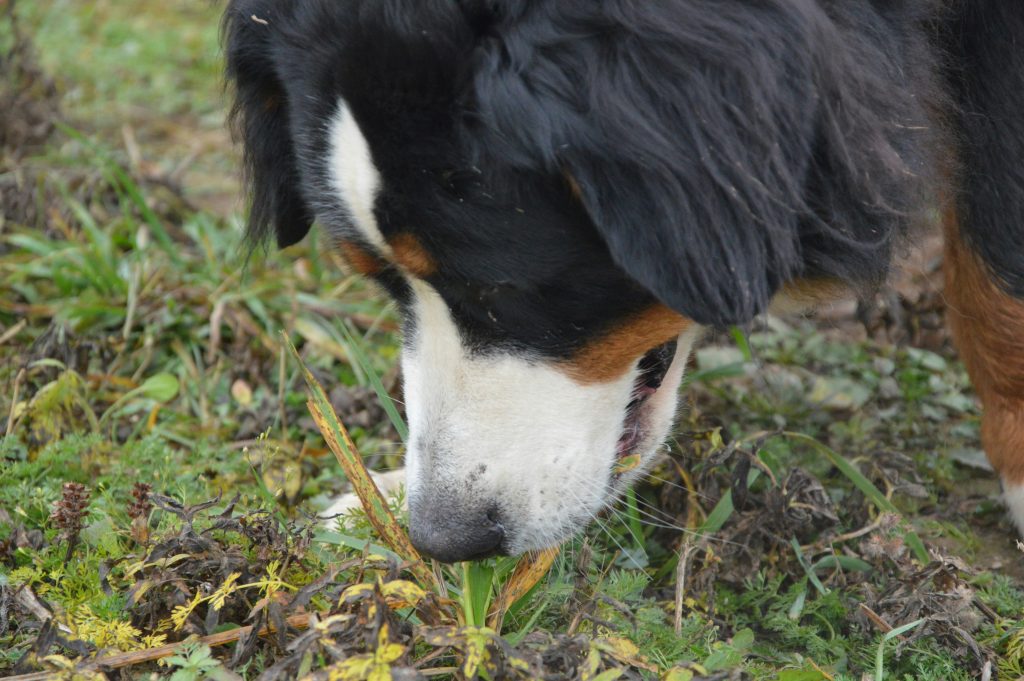
A dog may be afraid of grass because it feels wet, sharp, slippery, or unfamiliar. The dog may also have sore paws, allergies, insect bites, or a bad memory connected to a certain lawn.
Some dogs are not truly afraid of grass. They may avoid it because walking on it hurts or because they prefer a harder surface.
Watch your dog’s body language, check their paws, and look closely at the area they refuse to enter. Do not drag or force your dog onto the grass. Sudden fear should be taken seriously, especially when it comes with limping, itching, swelling, or other changes.
Article Overview:
Why Dogs May Suddenly Become Afraid of Grass
It can be confusing when a dog that normally walks across the lawn suddenly refuses to step on grass.
If the change happened suddenly, it is worth looking at what may have changed. Your dog could have stepped on something sharp, been bitten or stung, slipped on wet ground, or had a frightening experience in the yard. There may also be a new smell, noise, animal, or lawn treatment that you have not noticed.
Sometimes the problem has nothing to do with fear. A sore paw, painful joint, irritated skin, or difficulty with balance can make grass uncomfortable to walk on.
The first thing to work out is whether your dog is actually afraid of the grass, or whether something about the surface or the surrounding area is making them uncomfortable.
Is Your Dog Actually Afraid of the Grass?
A dog that refuses to walk on grass is not necessarily afraid of grass itself.
Watch what happens when your dog reaches the edge of the lawn. Their body language can help you work out whether they are frightened, in pain, or reacting to something in the environment.
Signs of fear or stress
A frightened or stressed dog may:
- Freeze at the edge of the grass
- Back away or try to escape
- Lower their body
- Tuck their tail
- Hold their ears back
- Tremble or shake
- Whine, bark, or pant
- Hide behind you
- Refuse treats they would normally enjoy
- Keep looking toward a particular part of the yard
Less obvious signs can include yawning, lip licking, looking away, or repeatedly sniffing the ground. Dogs can show several signs at once, and panting can have other causes such as heat or exercise.
Many of these signs are also described by the American Kennel Club in its article How to Tell If Your Dog Is Stressed.
Signs that something hurts
Pain can look surprisingly similar to fear. A dog with a sore paw or painful joint may stop at the edge of the grass because they expect walking across it to hurt.
Look for:
- Limping
- Holding one paw off the ground
- Licking or chewing the feet
- A torn or cracked nail
- Cuts or cracks in the paw pads
- Redness between the toes
- Swelling
- Bleeding
- A thorn, seed, burr, or other object stuck in the paw
- Discomfort when the paw is touched
If your dog suddenly starts avoiding grass, especially if they are also licking one paw or walking differently, check for a physical problem before assuming it is a behavioral issue.
Do not dig into a paw or pull on an object that is firmly embedded. A veterinarian should remove anything that cannot be safely taken out at home.
8 Reasons Your Dog May Be Avoiding Grass
There is no single explanation for every dog. Pay attention to when the behavior started, where it happens, and whether your dog avoids all grass or only one particular area.
1. The grass is wet, slippery, rough, or sharp
Grass does not always feel the same under a dog’s paws.
Wet grass can be cold or slippery, while dry grass can become stiff and rough. Cut stems, weeds, thorns, burrs, and sharp seeds can also make certain lawns uncomfortable.
This can be especially noticeable if your dog has already developed a sore paw. A surface that seems harmless to you may put pressure on an injured pad or toe.
Look closely at the lawn for:
- Thorns
- Burrs
- Sharp seeds
- Broken stems
- Small sticks
- Stones
- Other debris
Try taking your dog onto the same type of grass when it is dry and see whether the reaction changes.
2. Your dog has a paw, nail, or leg injury
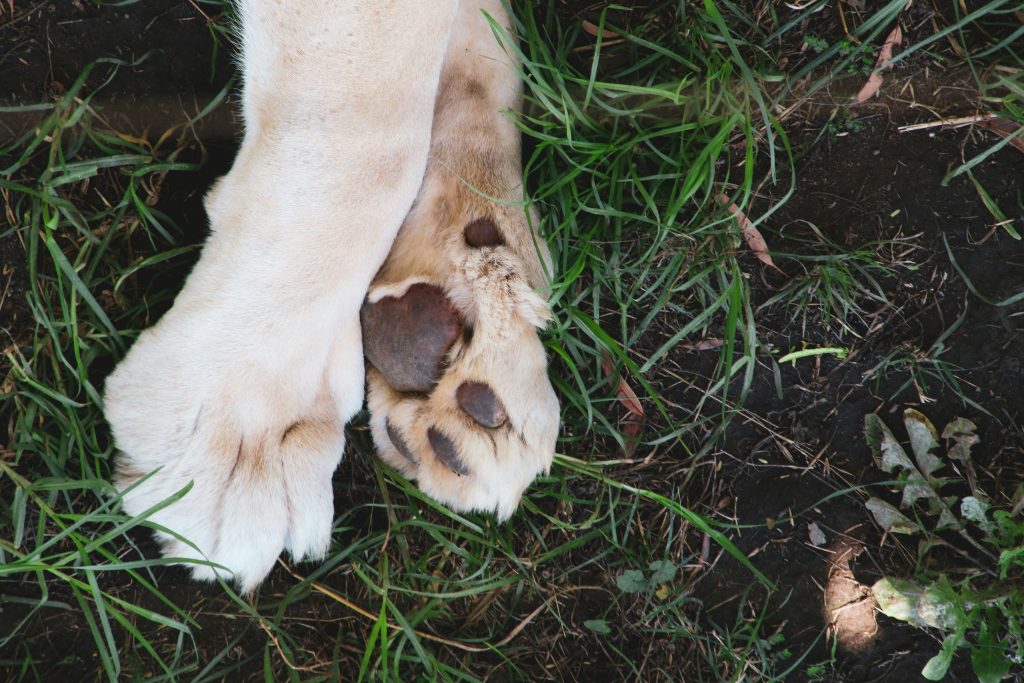
A small injury can make grass surprisingly uncomfortable.
Check each paw in good light, including between the toes and around the nails. Look for torn nails, cracked pads, cuts, splinters, grass seeds, swelling, or anything stuck between the toes.
A dog with a sore nail or paw may walk normally on a smooth indoor floor but hesitate on grass because the uneven surface changes how they place their weight.
If you notice persistent limping, swelling, bleeding, obvious pain, or an injury you cannot safely treat, contact your veterinarian.
3. Something in the grass is bothering your dog
Dogs can react to insects and other things that people may barely notice.
Ants, bees, wasps, ticks, and other insects can be found in lawns. A dog that has previously been bitten or stung may become cautious about returning to the same area.
Look at where your dog stops and whether they are particularly interested in one patch of grass. Check their paws, legs, belly, and other exposed skin for bites, bumps, or attached ticks.
Facial swelling, difficulty breathing, collapse, or severe weakness after a suspected sting is an emergency and requires immediate veterinary attention.
4. Allergies or skin irritation make grass uncomfortable
Some dogs develop skin irritation after spending time outdoors. Grass pollen and other environmental allergens can contribute to itching in susceptible dogs.
Signs may include:
- Paw licking or chewing
- Scratching after going outside
- Red or irritated skin
- Rubbing the face
- Repeated ear problems
- Irritation around the belly or legs
- Symptoms that become worse during particular seasons
If your dog repeatedly becomes itchy after going outside, talk to your veterinarian rather than assuming the grass itself is the only cause.
PetMD has covered this topic as well in their article Grass allergies in dogs: signs, causes and treatment. Alltough talk to your veterinarian when it comes to medicaiton and stuff in that area of expertise.
5. The lawn has a new smell or chemical treatment
Think about whether anything has changed recently.
Fertilizers, weed killers, insect treatments, cleaners, and other lawn products can alter the smell of an area. A dog may also notice a scent that you cannot detect.
If the lawn was recently treated, follow the product’s instructions about when pets can safely return. If you do not know what has been used on a public lawn, choose another area until you can find out.
If you believe your dog has walked through, licked, or swallowed a potentially harmful chemical, contact your veterinarian or an appropriate animal poison service.
6. Tall grass or something hiding in it

Tall grass changes what a dog can see and feel.
It can hide holes, sticks, animal waste, uneven ground, insects, or other objects. Long grass may also brush against a dog’s legs, belly, and face.
Some dogs may simply feel less comfortable when they cannot see where they are putting their feet.
If your dog avoids long grass but happily walks through short grass, the height and texture of the vegetation may be the important difference.
7. Your dog had a bad experience in that area
A single unpleasant experience can change how a dog responds to a particular place or situation.
For example, your dog may have:
- Slipped on the grass
- Stepped on something painful
- Been chased by another animal
- Been startled by a person
- Heard fireworks or thunder
- Been sprayed by a sprinkler
- Gotten caught on a leash or object
- Been frightened by lawn equipment
Dogs can also develop fear around particular sounds or situations. Veterinary behavior guidance commonly uses gradual exposure and positive associations to address fear rather than forcing a dog to confront the trigger.
This may explain why your dog avoids one yard but walks normally on grass somewhere else.
8. Pain, weakness or age-related changes are making grass harder to walk on
Grass is less predictable underfoot than a smooth indoor floor.
A dog with arthritis, joint pain, weakness, poor balance, reduced vision, or another physical problem may feel less secure on an uneven surface.
Older dogs may also become more cautious as their mobility or senses change. A sudden change in how an older dog walks or moves around outdoors deserves particular attention.
Do not assume that a sudden refusal to walk on grass is simply a training problem. A veterinarian can help rule out pain, illness, or other physical causes.
Why Is My Dog Afraid of One Yard but Not Other Grass?
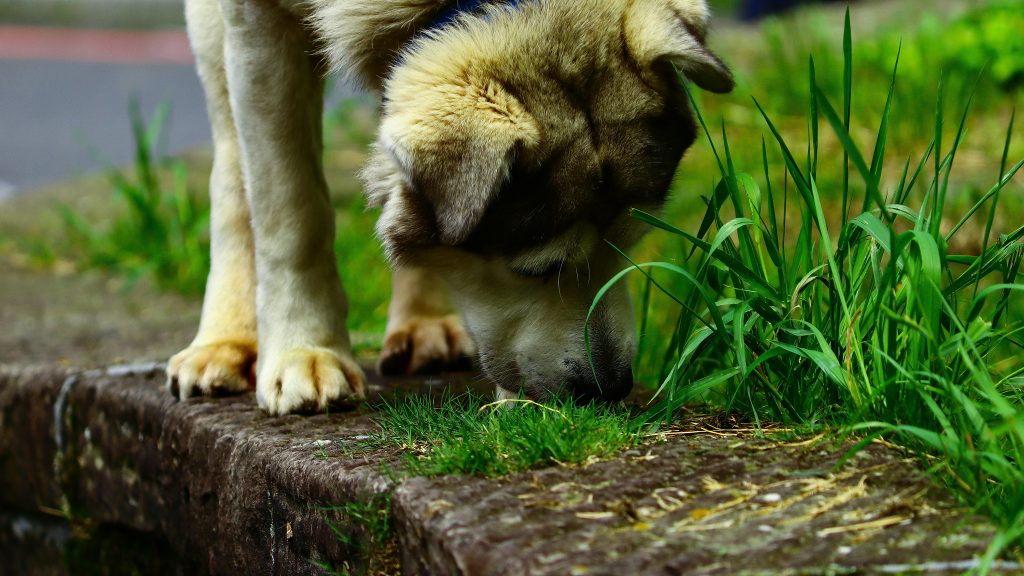
If your dog happily walks on grass in a park but refuses to enter your backyard, they may not be afraid of grass itself.
Something specific to that location may be triggering the reaction.
The surface is different
One lawn may have soft, short grass while another has rough weeds, bare patches, deep moisture, or uneven ground.
Compare the areas rather than looking only at the grass. Consider:
- Grass height
- Surface texture
- Moisture
- Temperature
- Slopes
- Holes or uneven ground
- Nearby plants and debris
A simple change in the surface may be enough to explain the difference.
There are unfamiliar animal smells
Dogs experience their surroundings through smell as well as sight and sound.
Another dog, cat, fox, rodent, or other animal may have passed through the yard. Your dog may notice scents that are impossible for you to detect.
Pay attention if your dog suddenly starts sniffing, staring toward a fence, or focusing on one particular part of the yard.
Something happens there at a particular time
The trigger may not be present every time you go outside.
A neighbor’s lawnmower, an automatic sprinkler, construction noise, barking dogs, traffic, or another recurring sound could be associated with the area.
Noise sensitivity is a recognized source of fear in dogs, and veterinarians recommend looking for patterns in where and when the reaction occurs.
Try observing the yard at different times of day. You may discover that your dog reacts to something nearby rather than to the grass itself.
How to Help a Dog Overcome a Fear of Grass
Do not force your dog onto the lawn.
If the problem is fear rather than pain, gradual exposure can help. The basic idea behind desensitization is to introduce the trigger at a level the dog can handle and increase the challenge slowly.
Counterconditioning adds something positive, such as treats or play, to help create a better association.
1. Rule out pain and injuries first
Before starting training, check your dog’s paws and the area they are avoiding.
Look for:
- Paw or nail injuries
- Swelling
- Redness
- Cuts
- Foreign objects
- Insects
- Chemicals
- Holes
- Sharp plants
- Other obvious hazards
If you find a medical problem, deal with that before trying to change the behavior. Vcahospitals covers this topic in their article Dog paw injuries and how to help.
2. Start far enough away that your dog is comfortable
Stand with your dog at a distance from the grass where they can remain relaxed.
Your dog should still be able to:
- Take treats
- Look at you
- Sniff normally
- Respond to familiar cues
- Move around without panicking
If your dog freezes, shakes, tries to escape, or refuses food, increase the distance.
The goal is not to see how close you can get before your dog reacts. The goal is to keep the experience manageable.
3. Reward calm curiosity
When your dog calmly looks toward the grass, sniffs in its direction, or chooses to move slightly closer, reward that behavior.
You can build on small steps:
- Looking at the grass
- Sniffing toward it
- Walking closer
- Standing near the edge
- Touching the grass with one paw
- Standing on the grass briefly
Let your dog make the choice to move forward. Avoid using a treat to lure the dog farther than they are comfortable going. Forced or overwhelming exposure can make fear worse rather than better.
4. Let progress happen in small steps
Your dog does not need to cross the entire lawn on the first attempt.
If one paw on the grass is all they can manage calmly, that may be enough for one session. On another day, they may be comfortable taking two steps.
Wait until your dog is relaxed at one level before making the next step more difficult. There is no fixed timetable. Some dogs improve quickly, while others need much longer.
5. Try another lawn
A quiet park or a friend’s yard can help you work out whether the problem is grass or your particular yard.
Choose a location with short grass, little noise, few distractions, and no obvious hazards.
If your dog walks comfortably there, look more closely at what is different about the original location.
6. Keep training sessions short
End the session while your dog is still coping well.
A few calm minutes can be more useful than a long session that ends with your dog frightened or overwhelmed.
Desensitization can take time, particularly when a fear has been present for a while. If you are struggling to make progress, a veterinarian or qualified animal behavior professional can help you build an appropriate plan.
What Not to Do
Don’t drag your dog onto the grass
Dragging a frightened dog onto the lawn removes their ability to move away and can increase their distress.
It also teaches the dog that approaching the grass may lead to an unpleasant experience.
Don’t punish your dog for refusing
Fear is not disobedience.
Shouting, leash corrections, or punishment may add another negative experience to an already stressful situation. Instead, move back to a point where your dog can relax and try again another time.
Don’t force your dog to “get used to it”
Putting a frightened dog directly into the middle of the situation is not the same as gradual desensitization.
If the exposure is too intense, the dog may become more frightened. Behavioral guidance generally recommends keeping fearful dogs below the point where they become overwhelmed and increasing exposure gradually.
Don’t assume it is purely behavioral
A dog that suddenly stops walking on grass may have a sore paw, painful joint, irritated skin, or another medical problem.
Look for physical signs before beginning a training program.
When to See a Veterinarian
A veterinary examination is a good idea when the change is sudden, persistent, or accompanied by other symptoms.
Contact your veterinarian if:
- Your dog suddenly stops walking on grass
- Your dog is limping
- A paw is swollen or bleeding
- A nail is torn or damaged
- Your dog repeatedly licks or chews the feet
- The skin is red, sore, or irritated
- Your dog cries or reacts when touched
- Your dog seems weak or unsteady
- The problem is getting worse
- Your dog has started avoiding other surfaces
- An older dog develops new problems with walking or vision
- Other significant behavior changes appear
Seek urgent veterinary care for difficulty breathing, facial swelling, collapse, severe weakness, or other signs of a serious allergic or medical reaction. swelling, collapse, heavy bleeding, suspected poisoning, or severe pain.
Frequently Asked Questions
Why will my dog walk on park grass but not backyard grass?
Something in the backyard may be causing the fear.
Possible causes include a strange smell, wildlife, chemicals, insects, a sprinkler, an electronic boundary, nearby noise, or a bad experience that happened there.
Inspect the yard and observe your dog closely to see where the reaction begins.
Can dog boots help?
Dog boots may help protect sensitive paws from rough grass, thorns, heat, or other surfaces. However, boots will not solve a fear caused by noise, a bad memory, or another trigger.
Check the fit and introduce the boots slowly.
Can grass allergies make dogs avoid lawns?
Yes. Grass pollen and contact with outdoor allergens can cause itching, redness, rashes, and paw licking. A dog may begin avoiding grass because they connect it with discomfort.
A veterinarian can help identify the cause and recommend safe treatment.
How long does it take to overcome this fear?
A mild fear may improve within several short sessions. A stronger fear may take weeks or longer.
Progress depends on the cause, the dog’s past experience, and whether training stays below the dog’s fear limit. Moving too quickly can slow the process.
Why does my dog eat grass but refuse to walk on it?
Eating grass and walking on grass are different behaviors.
Your dog may enjoy eating a few blades from the edge of a path but dislike the feeling of standing on a full lawn. The dog may also be afraid of one location rather than the plant itself.
Check for body language, paw pain, moisture, and location-specific triggers.
Final Thoughts
Dogs may become afraid of grass because of its texture, moisture, hidden hazards, insects, allergies, pain, noise, or a frightening experience.
Begin by deciding whether your dog is truly afraid or physically uncomfortable. Check the paws and lawn, then compare the dog’s reaction on different surfaces and in different locations.
Never drag, punish, or trap your dog on the grass. Use calm, gradual practice and reward every small sign of confidence.
When the fear starts suddenly or comes with pain, itching, limping, weakness, or other changes, contact your veterinarian. Solving the real cause is the fastest and safest way to help your dog feel comfortable outside again.